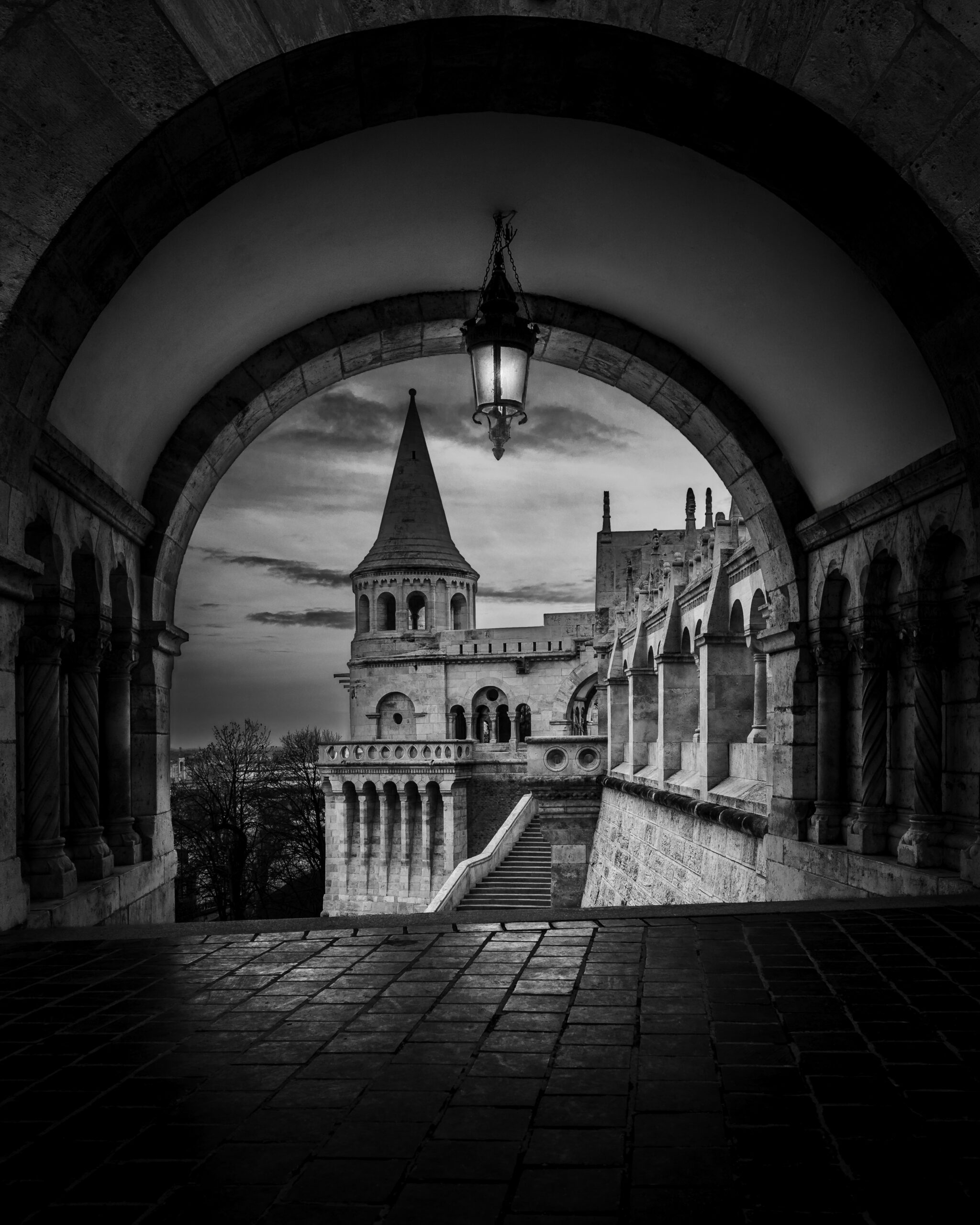
There is something important about being there.
Not just seeing a place through a screen. Not just imagining how it might look. Not just creating a version of it from a prompt.
Being there means walking through the weather. Waiting for the light to change. Missing the moment sometimes. Getting tired. Being disappointed. Being surprised. Standing still long enough for a place to reveal something small.
That experience matters to me.
It is part of the photograph.
Why real places still matter
Photography has always been connected to presence.
A photograph is not only the final image. It is also the walk that led to it, the silence before it, the weather that shaped it, the light that lasted for a few seconds, and the decision to notice.
When I look back at my own images, I do not only remember what they looked like.
I remember where I was standing.
I remember the cold, the heat, the road, the waiting, the people I was with, the quiet before pressing the shutter.
Sometimes I remember the effort more than the image itself.
And that is why real places still matter.
Because the photograph carries the experience of being there.
Real light changes everything
Light is never just technical.
It changes the emotion of a place.
The same street can feel ordinary at midday and cinematic in the evening. A mountain can feel heavy under clouds and almost unreal when the last light touches the peaks. A quiet building can become a photograph because shadow falls across it in the right way.
Real light is unpredictable.
You cannot fully control it. You can only observe it, wait for it, and respond when it happens.
That is one of the reasons I still love photography.
It asks you to pay attention.
It asks you to slow down.
It asks you to accept that not every moment will become an image, and that sometimes the best thing you can do is simply be ready.
Editing as interpretation
Real photography does not mean the image has to remain untouched.
Especially in black and white or fine art photography, editing is part of the language. We shape contrast, deepen shadows, lift light, remove distractions, and guide the eye toward what we felt in the scene.
For me, editing is not about inventing a place that was never there.
It is about interpreting the experience.
Sometimes the camera records a scene more literally than it felt. The file may look flatter, colder, or less emotional than the moment itself. Editing allows me to bring the photograph closer to the atmosphere I remember – the weight of the shadows, the direction of the light, the silence of the place, or the drama I felt when I stood there.
So when I say “real light,” I do not mean untouched light.
I mean light that existed.
Light I saw, responded to, and later shaped with intention.
Why I say “No AI”
For me, “No AI” is not about shouting against technology.
It is about being clear.
The images I share begin with real places, real observation, and real light. Editing is part of the interpretation, but the foundation is always something I experienced.
They are not generated locations.
They are not artificial scenes.
They are not imagined versions of places I never visited.
That distinction matters to me because my work is connected to memory, presence, and the feeling of actually moving through the world.
A generated image can be beautiful.
But it does not contain the same relationship with place.
It does not carry the walk, the waiting, the weather, the mistake, the patience, or the personal memory behind the frame.
Photography, for me, is not only about producing an image.
It is about experiencing the world with more attention.
Where AI fits into my workflow
When I say “No AI,” I am talking about the origin of the image.
I do not use AI to invent places I never visited, create artificial landscapes, or replace the experience of being there.
But I am not against tools that help speed up the editing process.
Photographers have always cleaned distractions, adjusted light, shaped contrast, removed small elements, and refined an image to bring it closer to the feeling of the scene. In the darkroom, this happened with dodging, burning, masking, and careful printing. In digital photography, it happens through editing software.
Today, some tools use AI to make parts of that process faster.
If I remove a small distraction, clean an edge, or simplify something that pulls attention away from the photograph, I see that as part of editing – not as replacing photography.
The important question for me is not whether a tool helped in the process.
The important question is: did the photograph begin with a real place, real light, and a real experience?
For my work, the answer is yes.
The value of imperfection
Real photography is imperfect.
Sometimes the light disappears before you are ready.
Sometimes the sky is flat.
Sometimes there are people in the frame you did not expect.
Sometimes the composition is not perfectly clean.
Sometimes the photograph only works because of something you could not control.
I like that.
Imperfection reminds me that the image came from life, not from a perfect construction.
It keeps photography human.
And often, the small imperfections are what make a photograph feel believable, personal, and alive.
Slowing down in a fast image world
We live in a time where images can appear instantly.
That speed can be impressive. But it can also make images feel less connected to experience.
Photography gives me a different rhythm.
It asks me to leave the house, walk the street, visit the place, wait for the weather, return when the light is better, or accept that the photograph did not happen that day.
There is value in that slower process.
Not because slow is always better.
But because slowing down changes the way you see.
You begin to notice small transitions of light. You become more aware of atmosphere. You pay attention to ordinary corners, quiet gestures, reflections, shadows, clouds, and the spaces between obvious subjects.
You stop looking only for spectacular scenes.
You start looking for what feels true.
What I want my photographs to carry
I want my photographs to carry a sense of place.
Not just how somewhere looked, but how it felt to stand there.
The weight of a mountain.
The silence of a street.
The warmth of evening light.
The mood of a city after rain.
The smallness of a person inside a wide landscape.
The quiet detail that could easily be missed.
This is why I return to the same idea again and again:
Real places.
Real light.
No AI-generated scenes.
It is not a slogan for the sake of having one.
It is a reminder of what I value.
Presence. Observation. Patience. Memory. Atmosphere.
A quieter way of seeing
For me, photography is not only about making images.
It is a way of staying connected to the world.
A reason to slow down.
A reason to look again.
A reason to notice the ordinary before it disappears.
That is why I still believe in being there.
Walking. Waiting. Watching the light change.
Letting the world remain real.
If this way of seeing speaks to you, The Quiet Photographer goes deeper into building a calmer creative rhythm – through small habits, observation, and creating without pressure.