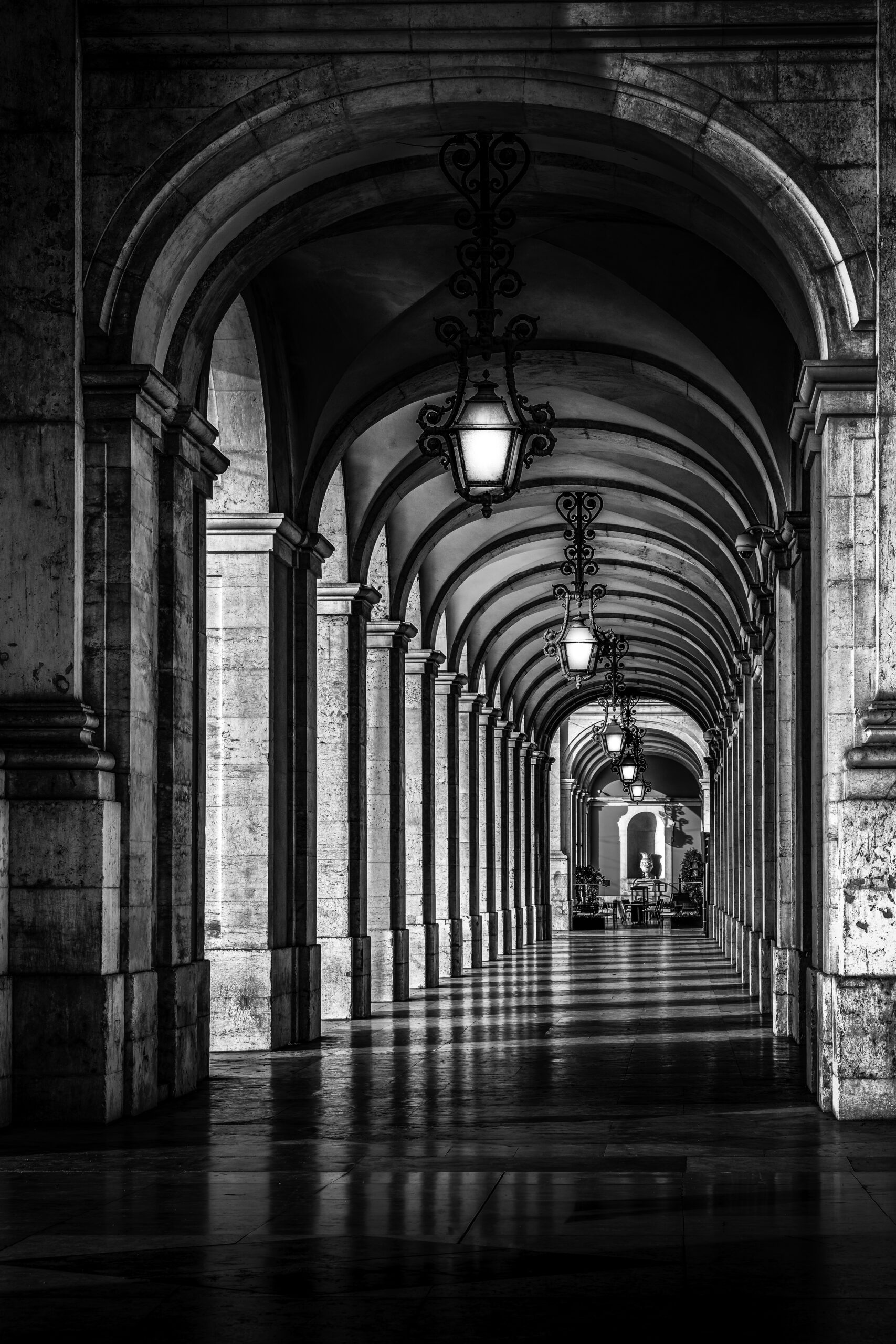
Composition is often explained as a set of rules.
- Rule of thirds.
- Leading lines.
- Symmetry.
- Foreground interest.
- Negative space.
- Framing.
These can all be useful. I do not think they are wrong. In the beginning, they can help you understand why some photographs feel stronger than others.
But after a while, I started feeling that composition is not only about where things are placed.
It is also about where the eye is allowed to rest.
That question feels more important to me now.
Where does the photograph invite you to look?
Where does it slow you down?
Where does it hold your attention without forcing it?
Composition is not just arrangement
When we talk about composition, it is easy to think only about structure.
- Where the subject sits in the frame.
- How the lines move.
- How the shapes balance.
- How much space is left around the scene.
All of that matters.
But composition is also emotional.
The same subject can feel calm, lonely, dramatic, heavy, intimate, or distant depending on how it is framed.
Move closer, and the photograph may feel personal.
Step back, and the same subject may feel small inside a larger world.
Place someone at the edge of the frame, and the image may feel uncertain.
Give them space, and the photograph may feel quiet.
Composition is not only what you include.
It is how you let the viewer feel their way through the image.
The eye needs somewhere to land
A photograph can have many interesting parts and still feel confusing.
Sometimes this happens because the eye has nowhere to land.
- Everything competes.
- Too many bright areas.
- Too many subjects.
- Too many edges pulling attention away.
- Too many details that do not support the feeling.
When that happens, the viewer may look at the image, but not stay with it.
This is something I think about a lot when I photograph and when I edit.
Where is the first place the eye goes?
Is that where I want it to go?
What happens after that?
Does the eye move naturally through the frame, or does it keep escaping?
A strong composition does not always need to be complicated.
Sometimes it only needs one clear place for attention to rest.
Quiet space matters
One thing I have learned to appreciate more over time is quiet space.
- Empty sky.
- A dark wall.
- A calm foreground.
- An area of shadow.
- A simple patch of colour.
- A part of the image where not much is happening.
At first, empty space can feel like wasted space.
But it often gives the photograph room to breathe.
Without quiet areas, the image can become too busy. The subject has no space around it. The mood has no room to build. The viewer has no pause.
In music, silence matters.
In photography, visual silence matters too.
It helps the important parts of the frame feel more intentional.
What should be left outside
Composition is not only about choosing what to include.
It is also about choosing what to leave outside.
Sometimes the strongest decision is not adding more, but removing more.
- A distracting sign at the edge.
- A bright corner that pulls the eye away.
- Too much sky.
- Too much foreground.
- A second subject that weakens the first.
- A detail that explains too much.
This is why I often move slightly before taking a photograph.
- One step left.
- One step right.
- A little lower.
- A little higher.
- A few seconds of waiting.
Small changes can completely change the way the frame feels.
And sometimes the photograph becomes stronger simply because it becomes quieter.
Light decides the path
Light is one of the strongest compositional tools.
Even before the viewer understands the subject, the eye usually follows light.
- A bright face in a dark street.
- A mountain peak catching the last sun.
- A window glowing inside a shadowed building.
- A line of light crossing the pavement.
- A small figure walking through brightness.
Light tells the eye where to begin.
Shadow tells the eye where to pause.
This is why composition and editing are connected. Sometimes the composition is already there, but the edit needs to support the path of attention.
- Darken what distracts.
- Lift what matters.
- Soften what competes.
- Guide the eye without making the image feel forced.
For me, this is not manipulation in a dishonest way.
It is visual direction.
It is helping the photograph speak more clearly.
Balance is a feeling
Balance does not always mean symmetry.
A photograph can be balanced even when the subject is small, off-centre, or surrounded by empty space.
Balance is more about weight.
- A small bright area can balance a large dark area.
- A tiny human figure can balance a wide landscape.
- A simple shape can hold a busy frame together.
- A quiet corner can make a dramatic scene feel less heavy.
This kind of balance is not always something I calculate.
Often, I feel it.
I look through the viewfinder and something either settles or it does not.
The frame either feels calm, or it feels like something is pulling too hard.
That instinct takes time to develop. And even then, it is not perfect.
But the more you photograph, the more you start recognising when an image feels visually restless.
Composition can change the story
The way you frame a scene changes what the photograph says.
A person photographed close may feel important, present, emotional.
The same person photographed small inside a landscape may feel quiet, fragile, or reflective.
A street photographed wide may feel full of life.
The same street photographed through a small detail may feel private and still.
This is why composition is not only a technical decision.
It is a storytelling decision.
Before pressing the shutter, it helps to ask:
What is this photograph really about?
- Is it about the subject?
- The place?
- The light?
- The silence?
- The scale?
- The relationship between things?
Once you know what the photograph is about, composition becomes less about rules and more about honesty.
You are not just arranging the frame.
You are choosing what the viewer will feel first.
I still get it wrong
There are many times I only understand the composition later.
At the moment, something feels interesting, so I take the photograph. But when I look at it afterwards, I realise the frame is too busy, the subject is not clear, the edges are distracting, or the feeling I had did not translate.
That can be frustrating.
But it is also part of learning.
Sometimes the mistake shows you what you were really trying to photograph.
- Maybe the subject was not the building, but the shadow.
- Maybe the photograph needed more space.
- Maybe it needed less.
- Maybe the image was not about the view, but about the small person inside it.
Composition improves when you review your work honestly.
Not harshly.
Honestly.
Ask what works. Ask what pulls attention away. Ask where the eye rests. Ask where it gets lost.
This kind of review teaches you as much as taking the photograph.
A small exercise
Take one scene and make five different compositions.
Do not change the subject.
Change only your position and framing.
- Make one image wide.
- Make one image close.
- Place the subject in the centre.
- Place it near the edge.
- Use more negative space.
- Remove something from the frame.
- Wait for light or a person to change the balance.
Then compare the images.
- Which one feels quietest?
- Which one feels strongest?
- Which one feels too obvious?
- Which one gives the eye somewhere to rest?
This exercise is simple, but it teaches something important:
Composition is not one correct answer.
It is a choice.
And every choice changes the feeling.
A quieter way to compose
For me, composition is not about proving that I know the rules.
It is about creating a frame that feels intentional.
A place where the eye can enter.
A path it can follow.
A quiet space where it can rest.
Sometimes that means using a classic rule. Sometimes it means ignoring the rule completely.
The important thing is not whether the composition looks clever.
The important thing is whether it supports the photograph.
Does it protect the mood?
Does it guide attention?
Does it make the image feel closer to what you felt when you stood there?
That is the question I keep returning to.
Not “Is this perfect?”
But:
Where does the eye rest?
If you want help understanding composition, visual balance, editing, or how to review your own images more clearly, my 1-to-1 photography guidance can help you simplify the process and develop your eye with more intention.